
Taro Smoothie (Creamy Bubble-Tea Style)
A creamy, naturally lavender taro smoothie that tastes like vanilla ice cream met a sweet, nutty root. Made with real taro in 10 minutes — the homemade version of your favourite bubble-tea flavour.
Most of us meet taro the same way: through a straw. It’s that mysterious purple bubble tea on the menu — sweet, creamy, vaguely vanilla — and for the longest time I had no idea I was drinking a root vegetable. Taro is a starchy root, cousin to the potato, and finding that out kind of blew my mind. The thing that tastes like dessert is basically a spud.
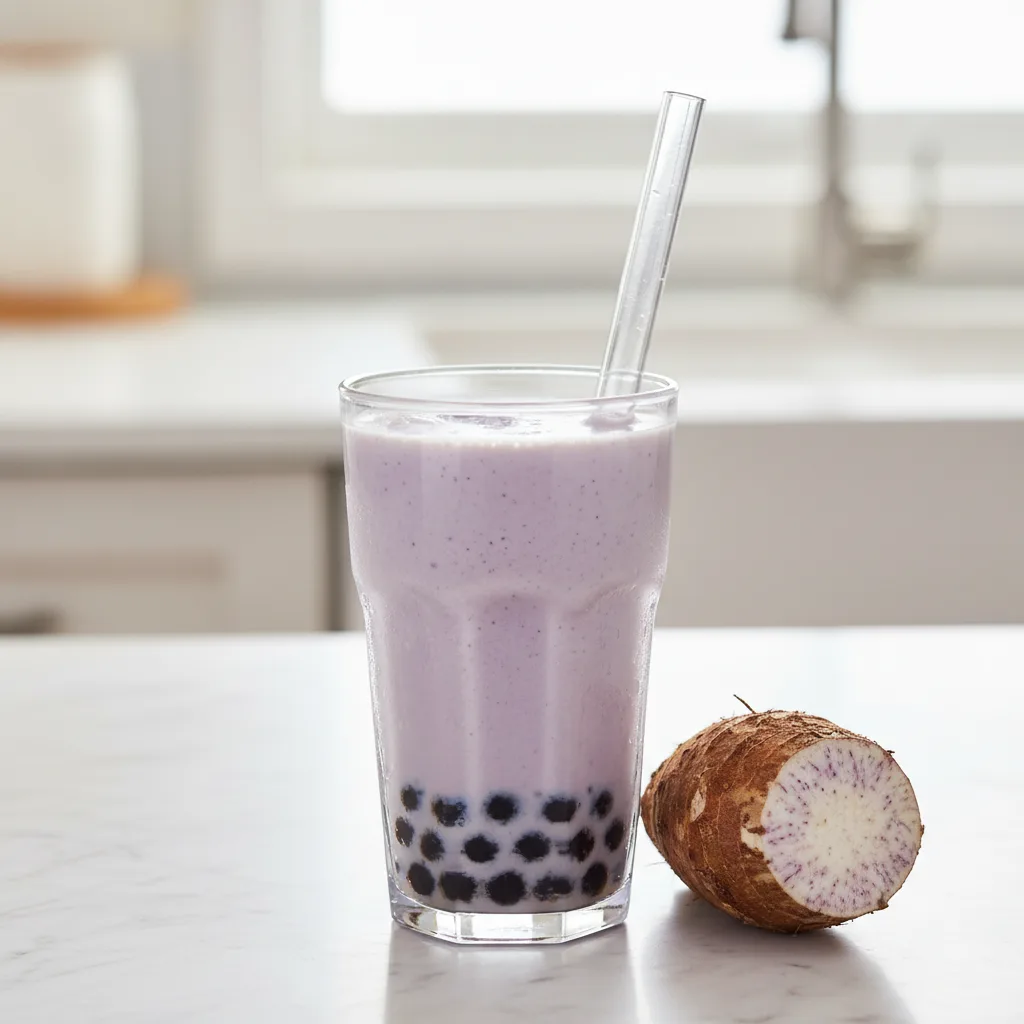
Here’s the bit the bubble-tea shops won’t tell you, though: real taro isn’t actually neon purple. Cook a fresh one and it’s creamy white with little lilac freckles, so a homemade taro smoothie comes out a soft, dusky lavender — pretty in a quiet, natural way, not a highlighter. What you lose in drama you more than gain in flavour: blended with banana and a little condensed milk, real taro tastes like vanilla ice cream with a warm, nutty, sweet-potato depth. Ten minutes, and it’s better than the shop version.
Why real taro wins
Real taro = real flavour (and a natural colour)
Cook a fresh taro root and you get the genuine nutty-vanilla taste, plus that soft, true lavender colour that no dye can fake. It’s the gap between a drink that tastes like taro and one that just tastes like sweet purple syrup.
Banana makes it creamy and balances the starch
Taro leans starchy, and a ripe banana is what rounds it off — it folds in natural sweetness and lends that thick, milkshake-style body, all without a heavy hand on the sugar.
Condensed milk for that bubble-tea sweetness
That single spoon of sweetened condensed milk is the café trick: rich, creamy, sweet to just the right point. Prefer honey or plain sugar? Either does the job.
Ice and a good blend for the silky texture
Blitzed with ice, the whole thing turns frosty and smooth — properly sippable, and built for a wide boba straw.
Is it actually good for you?
Under all that dessert-like flavour, taro pulls genuine nutritional weight: it brings fibre, potassium and slow-release complex carbohydrates, with a little vitamin C and some antioxidants along for the ride. Spin it with banana and milk and you get a filling, energising treat that sits a notch lighter than a true milkshake. If you want the full breakdown, there’s a thorough look at taro root’s nutrition and benefits on Healthline.
So who reaches for this one? Honestly, anyone who has stared at a boba menu and wondered what that purple drink actually is — taro fans, vanilla-and-nutty types, and people who like their smoothies creamy rather than fruity. It also happens to be a wallet-friendly stand-in for a pricey café run, a fun glass for kids and teens, and a gentler swap when a milkshake feels like a bit much.
Everything you’ll need
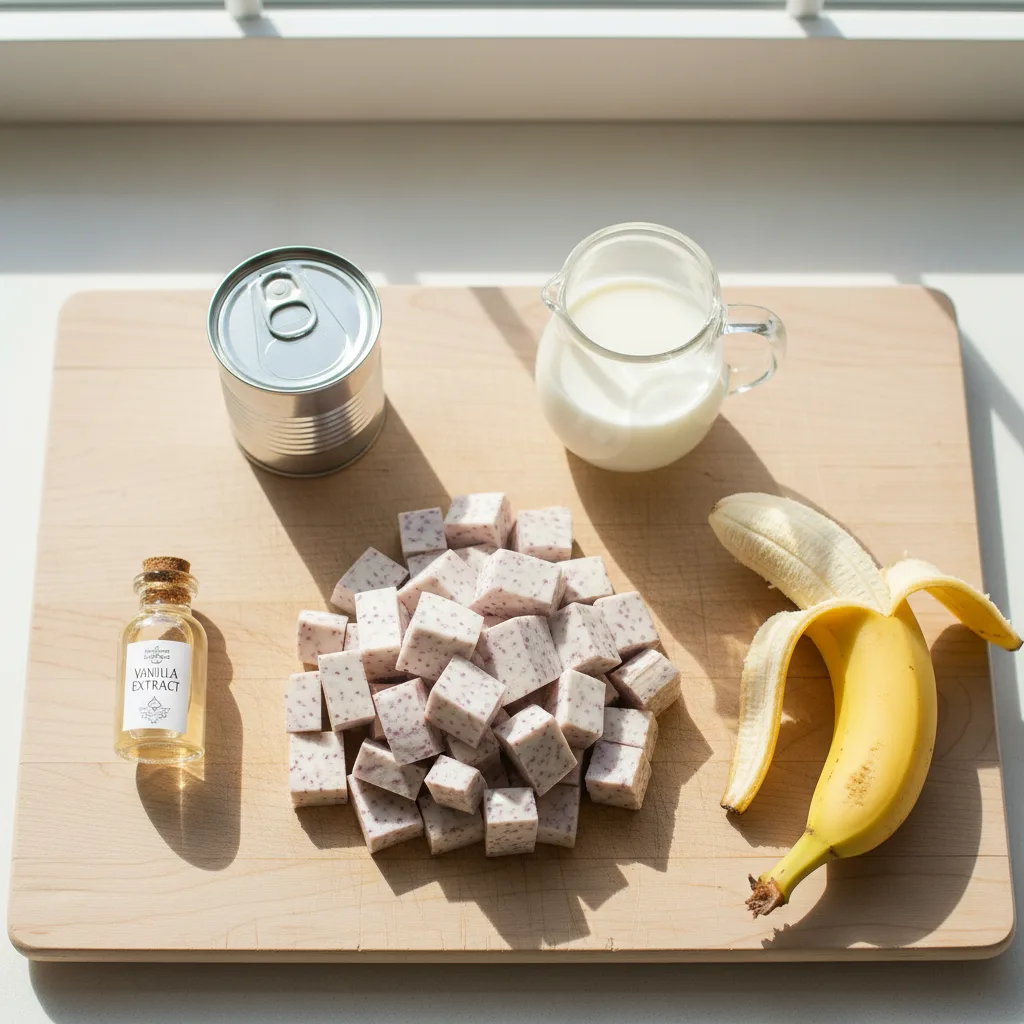
- Taro — the star; cooked fresh taro (or taro powder for speed) gives the nutty-vanilla flavour.
- Banana — adds creaminess, natural sweetness and balances the starch.
- Milk — dairy, oat or coconut; the creamy base.
- Sweetened condensed milk — the bubble-tea-style sweetness (honey or sugar work too).
- Vanilla — rounds out and lifts taro’s natural flavour.
- Tapioca pearls (optional) — for the full boba experience.
Let’s make it
-
Cook the taro (if fresh). Peel and cube the taro, then steam or boil until very soft, about 15–20 minutes; let it cool. (Using taro powder? Skip to step 2.)
-
Add everything to the blender. Pour in the milk, condensed milk and vanilla, then add the cooked taro (or powder) and banana.
-
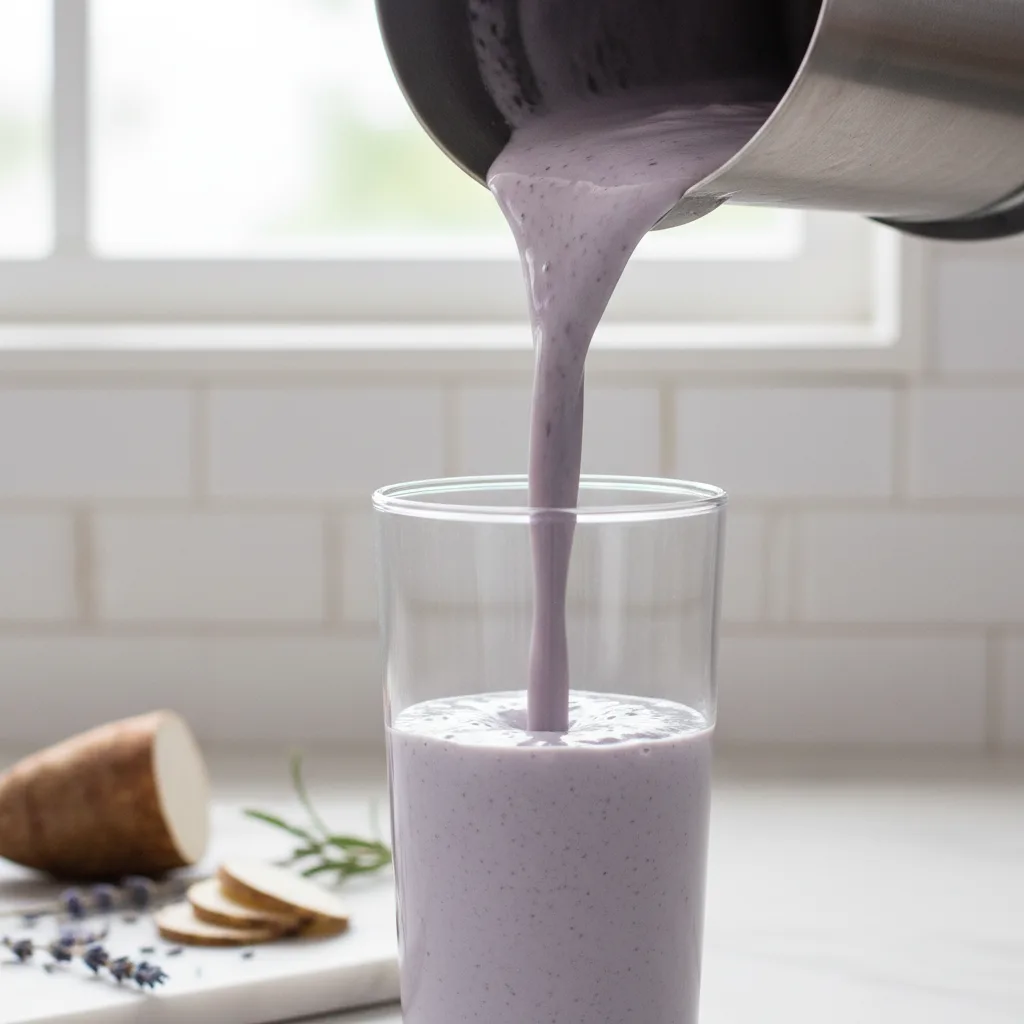
Blend until smooth. Add the ice and blend on high until thick, smooth and creamy.
-
Taste and adjust. Add more condensed milk for sweetness, or a splash of milk to thin it.
-
Serve. Pour into glasses, add tapioca pearls if you like, and enjoy right away with a wide straw.
A handful of tips
On cooking taro safely: Always cook taro until soft before eating — raw taro contains calcium oxalate, which can irritate the mouth and throat. Peel it under running water (the raw skin can be slightly irritating to handle).
On colour: Real taro gives a gentle, natural lavender. For a deeper purple, add a spoon of purple taro powder — but skip artificial colouring.
On thickness: Use a frozen banana or more ice for a thick, spoonable smoothie; add milk to make it more drinkable.
Flavour twists
- Taro latte: skip the banana and ice, warm the milk, and blend for a cosy hot taro drink.
- Extra purple: add a spoon of purple taro powder for a deeper, more vivid colour.
- Coconut twist: use coconut milk for a tropical, dairy-free version.
- Add the pearls: drop in chewy tapioca for the full bubble-tea experience — see our boba smoothie for how to cook them.
- More colour on the menu: for another striking, naturally-coloured glass, try our deep-purple heavy metal detox smoothie.
- Go full dessert: if you love a creamy, dessert-like smoothie, the indulgent Peanut Paradise smoothie is the chocolate-peanut-butter one to try next.
Make-ahead
Drink it now: the moment you stop sipping, a smoothie starts to settle and split — so this one’s at its best the second it’s poured.
Cook ahead: steam a batch of taro in advance and refrigerate or freeze it, so a smoothie comes together in minutes.
Freeze it: spoon any leftovers into ice-lolly moulds and you’ve got creamy taro ice pops for later.
Print it: since cooking and mashing the taro keeps your hands busy, the print button here gives you a tidy paper card to follow at the counter — no scrolling back through the page mid-blend.
Nutrition per glass
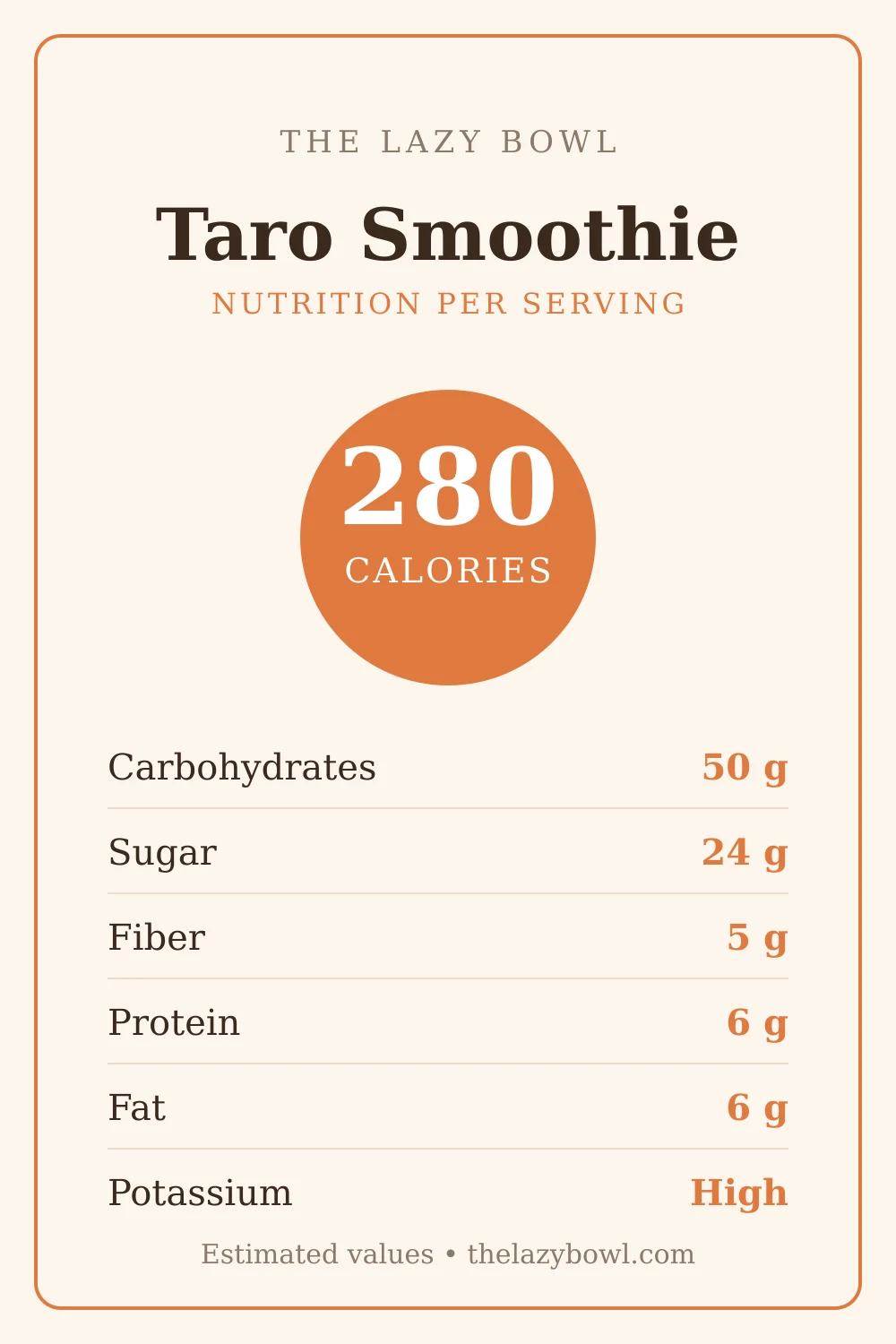
Here’s the approximate nutrition per serving (this recipe makes two). Because taro is a starchy root, this is a satisfying, carb-rich smoothie — great as an energising treat. Values are estimates and vary with your exact ingredients and how much sweetener you add.
| Nutrient | Per serving |
|---|---|
| Calories | ~280 |
| Carbohydrates | 50 g |
| Sugar | 24 g |
| Fiber | 5 g |
| Protein | 6 g |
| Fat | 6 g |
| Potassium | High |
Fancy something a touch lighter? Reach for a low-fat milk, trade the condensed milk for a drizzle of honey, and lean on the banana to carry most of the sweetness.
Nutrition note: These values are estimates calculated from the ingredients and are for general information only — not medical or dietary advice. Actual numbers vary by brand and portion. For precise data, check product labels or USDA FoodData Central, and see our disclaimer.
Taro smoothie FAQ
What does a taro smoothie taste like?
Taro has a mild, sweet, nutty and slightly vanilla flavour — people often describe a good taro smoothie as tasting like vanilla ice cream with a cozy, sweet-potato-like depth. It’s gently sweet rather than fruity, which is exactly why it’s such a popular, comforting bubble-tea flavour.
Is taro naturally purple?
Real taro is mostly creamy white with tiny purple flecks, so a homemade taro smoothie comes out a soft, natural lavender-grey — not the bright neon purple you see in some shops, which usually comes from added taro powder or colouring. A spoon of purple taro powder will deepen the colour if you want it more vivid.
Do I have to cook the taro first?
Yes — always. Raw taro contains calcium oxalate and can irritate your mouth and throat, so it must be cooked until soft before eating. Steam or boil peeled, cubed taro until tender, then cool it before blending. Taro powder is already processed and safe to use straight away.
Can I use taro powder instead of fresh taro?
Absolutely — it’s the quickest way. Use about 3 tablespoons of taro powder in place of the cooked taro and blend as usual. Many powders are pre-sweetened, so taste before adding extra condensed milk or sugar.
How do I make it dairy-free or vegan?
Use oat or coconut milk and swap the sweetened condensed milk for maple syrup, sugar, or a dairy-free condensed milk. The taro and banana already give it a creamy body, so it stays rich and smooth.
Rate this recipe
Thanks for rating! ★
Did you make this smoothie? How did it turn out?
You have already voted on this recipe.