Creamy Matcha Smoothie (Low-Carb)
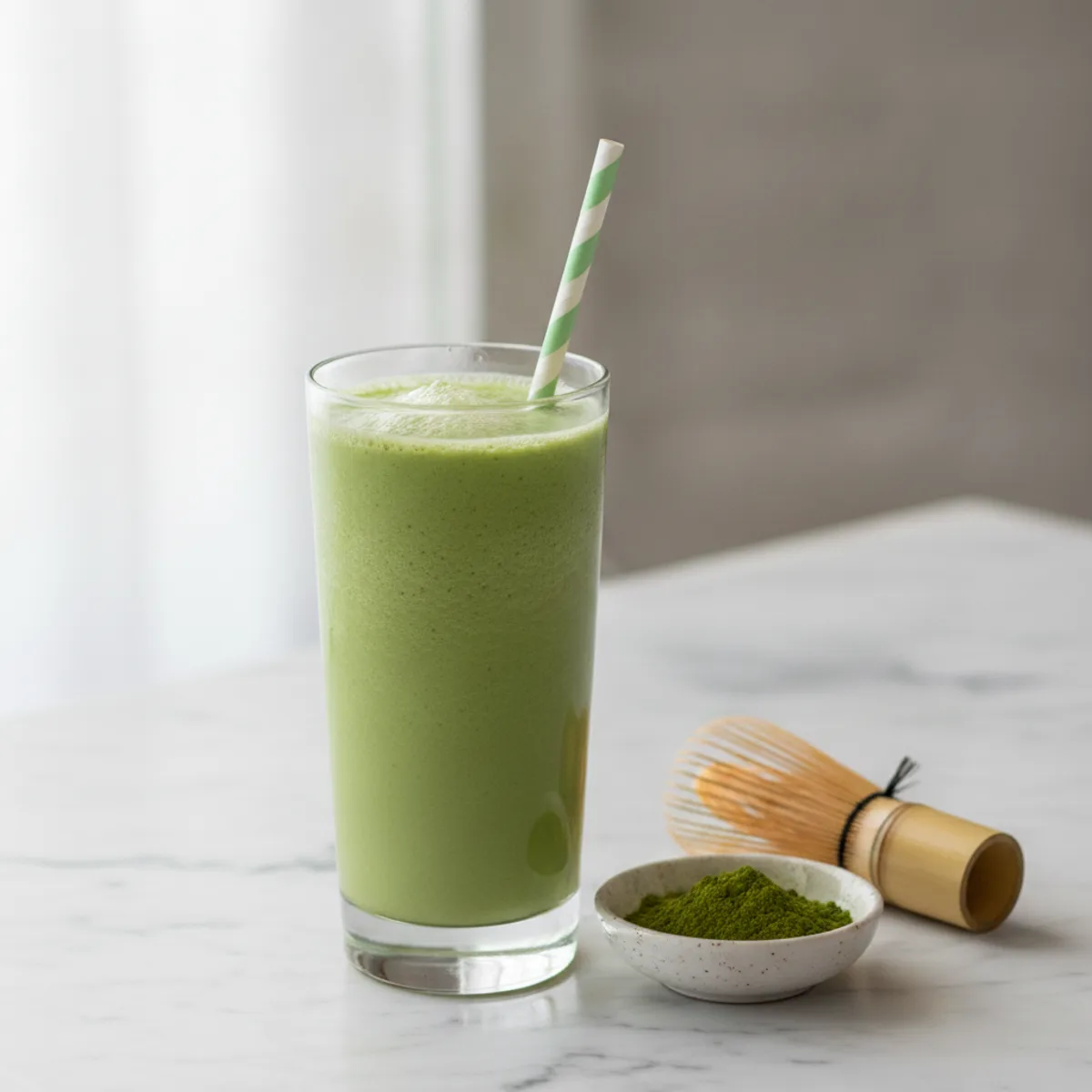
A creamy matcha green tea smoothie that's keto and just 4g net carbs. Calm, focused energy in a glass — café-style matcha made low-carb and sugar-free, ready in 5 minutes.
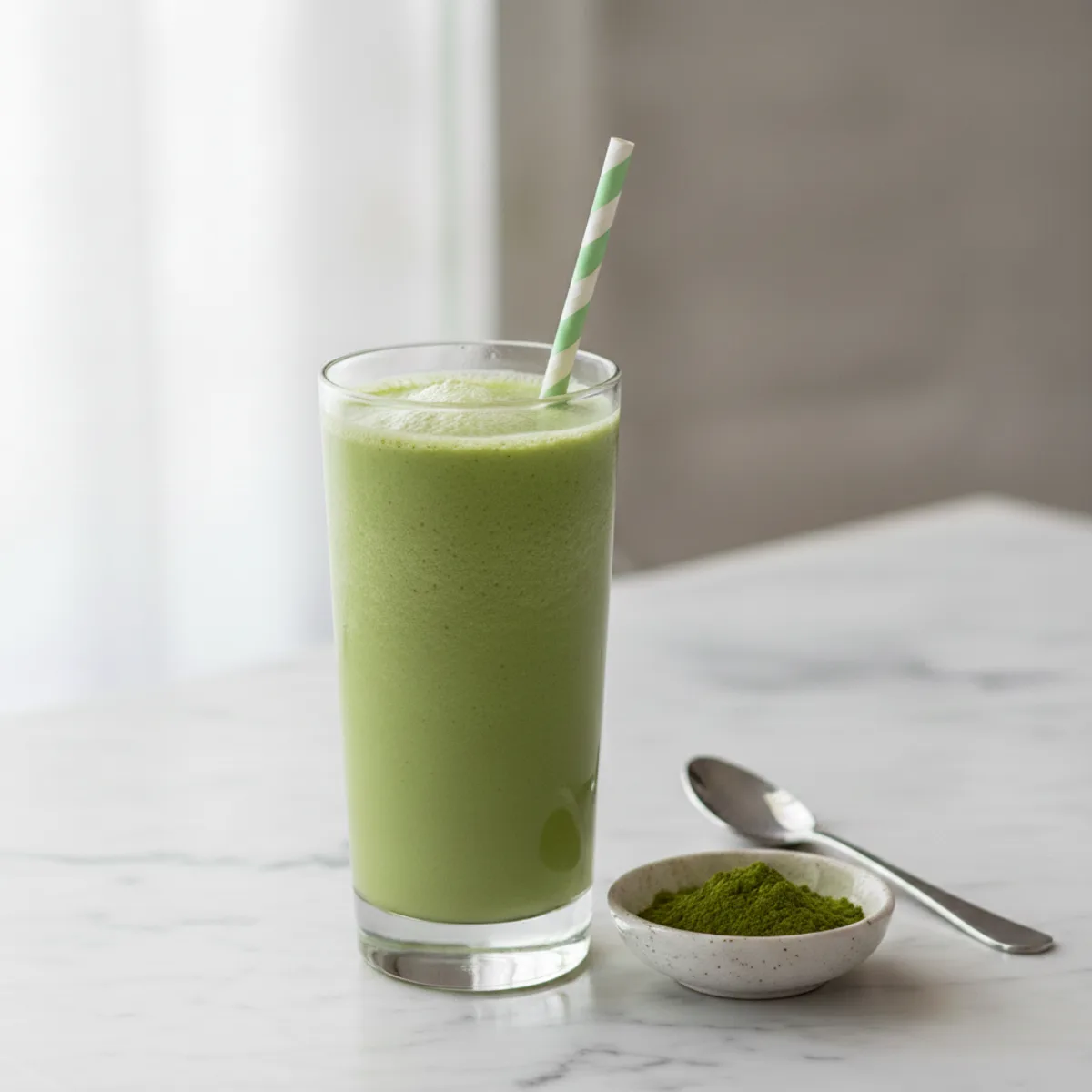
There’s a particular afternoon slump that coffee doesn’t really fix — it just trades the tiredness for jitters and then drops you off a cliff at four o’clock. Matcha is my answer to that. It’s powdered green tea, whisked into café drinks all over the world, and it gives you a clean, calm kind of energy that coffee can’t: alert but not wired, focused but not buzzy. The catch is that a matcha latte from a shop is usually swimming in sweetened milk and syrup. This smoothie keeps the bright, grassy matcha and the creamy latte feel but builds it on almond milk, cream and a keto sweetener — so it lands at around 4g net carbs. Vivid green, lightly sweet, and exactly the steady lift the afternoon needs.
What makes it keto
A café matcha latte sounds healthy, but it’s often one of the more sugary things on the menu — the matcha itself is fine, but it’s mixed with sweetened oat or coconut milk and a pump or two of vanilla syrup. This version keeps the good part and drops the sugar. Matcha is just ground green tea leaves, so it brings all the flavour and the gentle caffeine with essentially zero carbs. The body and that latte-like creaminess come from heavy cream and unsweetened almond milk, both very low in carbs, and an optional spoon of MCT oil adds clean, fat-based energy. A keto sweetener does the sweetening. Flavour and steady energy from fat and tea, none of the sugar.
Ingredients
Five simple things and a tin of matcha. Here’s everything, labelled:
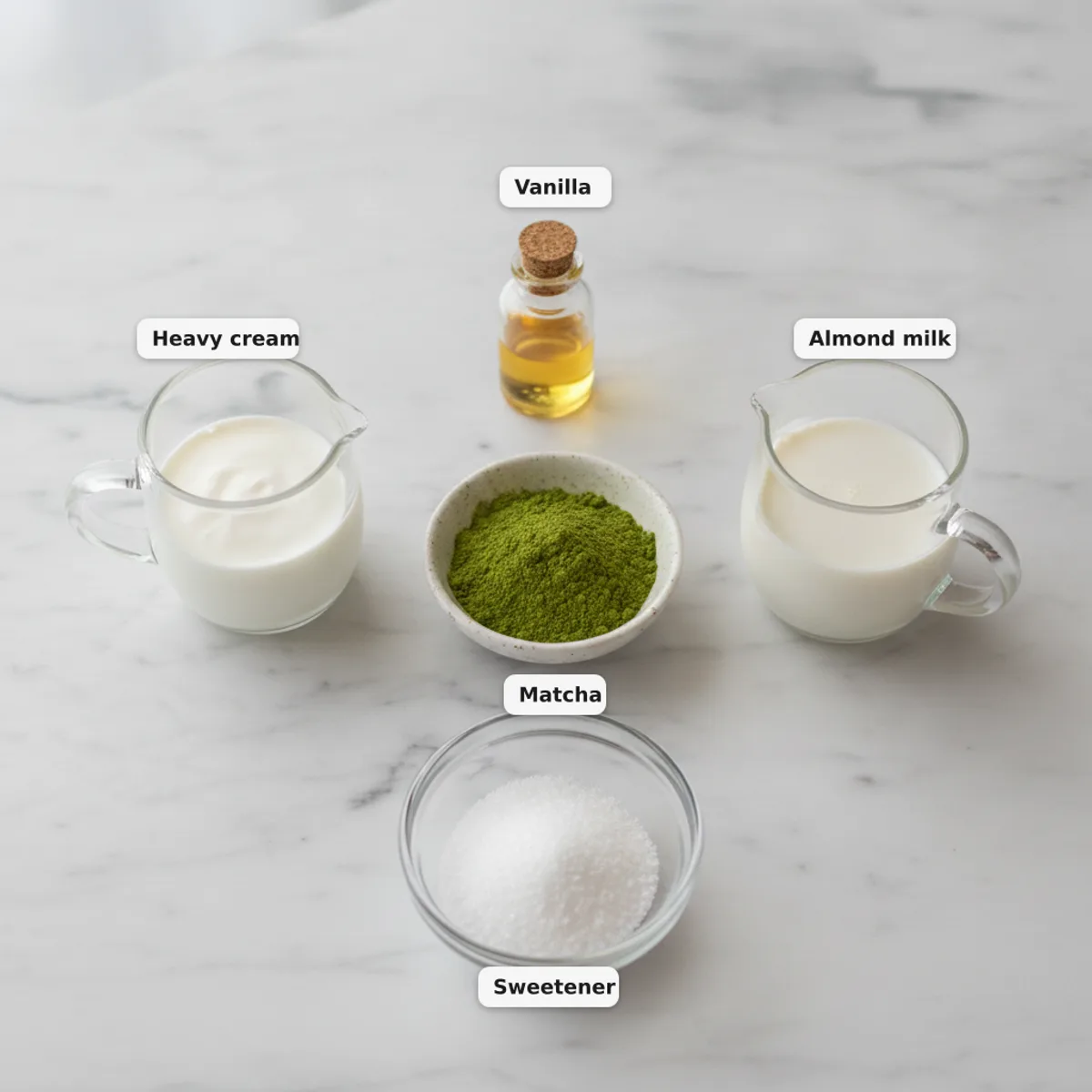
The star: a teaspoon of matcha powder. It brings the colour, the fresh grassy flavour and the calm, focused caffeine lift — the whole personality of the drink.
The creamy latte base: unsweetened almond milk to blend and heavy cream for that smooth, frothy, latte-like body.
The finish: keto sweetener to taste, a little vanilla to round out the matcha, and an optional spoon of MCT oil for extra staying power.
How to make it
-
Add the liquids and matcha. Pour the almond milk and heavy cream into the blender, then sift in the matcha (sifting keeps it from clumping), and add the MCT oil if using, the sweetener and the vanilla.
-
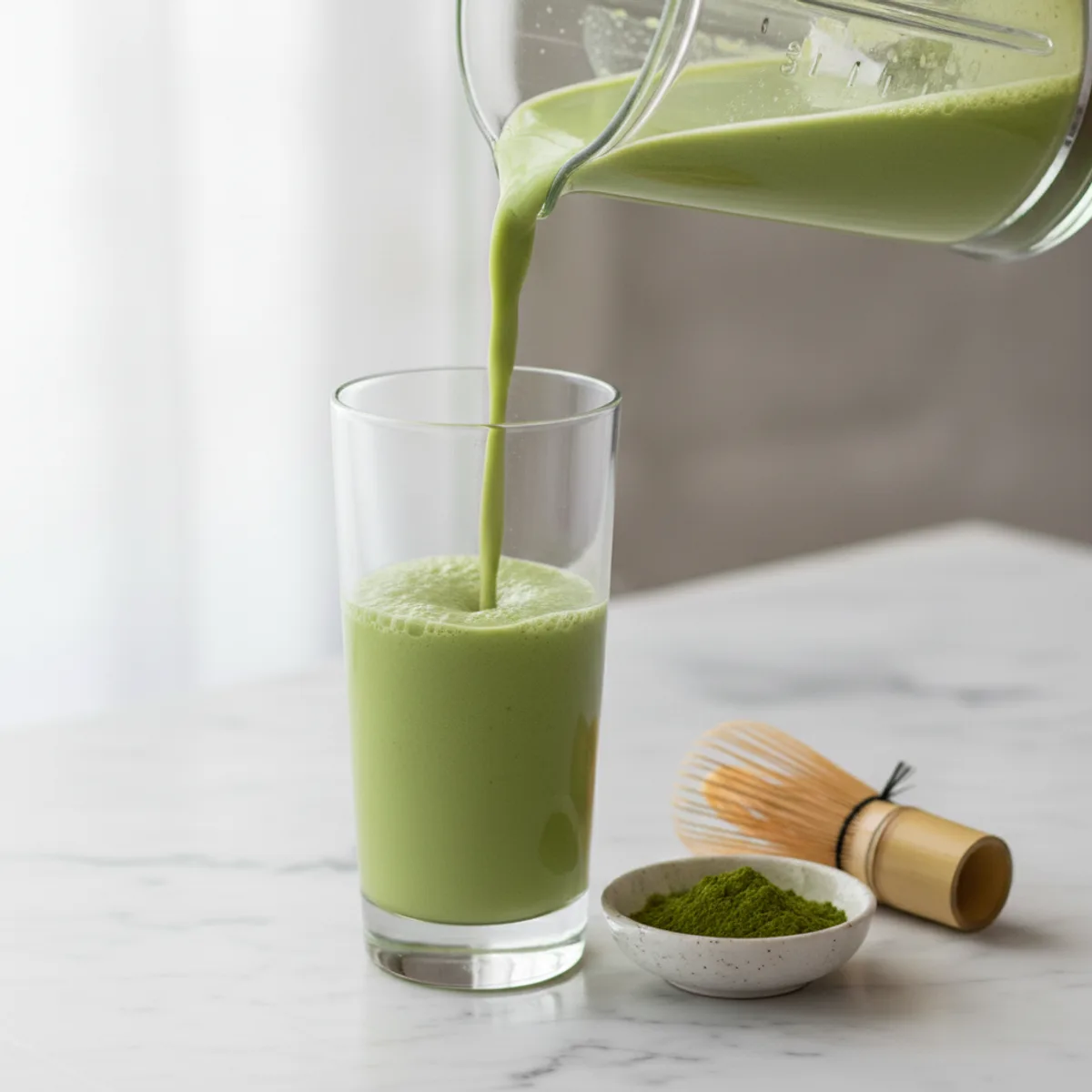
Blend until frothy and green. Add the ice and blend on high for 30–45 seconds, until it’s smooth, foamy and an even jade green with no specks of matcha left.
-
Taste and adjust. Add more sweetener for a sweeter cup, a splash more almond milk to thin it, or a touch more matcha if you want it stronger and greener.
-
Pour and enjoy. Tip it into a tall glass and drink it cold, while it’s at its frothiest.
Tips for the best matcha smoothie
Sift the matcha first: matcha clumps easily, and a quick sift through a small strainer is the difference between a smooth drink and little bitter green lumps. Blending helps, but sifting guarantees it.
Use a vivid green powder: the colour tells you everything — bright, vivid green means fresh, sweet and mellow; dull or yellowish means old and bitter. Buy a good culinary grade and store it sealed away from light.
Don’t overdo it: matcha is potent. Start with a level teaspoon, taste, and build up. Too much at once turns it bitter and astringent rather than richer.
Lean on the cream for a latte feel: if you want it to taste like a proper iced matcha latte, keep the cream in and blend it well for that thick, foamy top.
Print it for the afternoon: if this becomes your three-o’clock ritual, hit the print button on this page for a clean one-page card — free, no sign-up — and keep it by the blender.
Make it your own
- Iced matcha latte: use a little more almond milk and less ice for a thinner, more drinkable latte rather than a thick smoothie.
- Coconut matcha: swap the heavy cream for full-fat coconut cream for a dairy-free, subtly tropical version.
- Matcha protein shake: add a scoop of vanilla keto protein powder to turn it into a filling breakfast or post-workout drink.
- More low-carb sips: if you like a caffeinated lift, the creamy coffee breakfast smoothie is the coffee cousin of this one, and the creamy avocado smoothie makes a great green breakfast.
The calm-energy upside
Matcha’s real trick is the kind of energy it gives you. Because you’re drinking the whole powdered leaf rather than a steeped-and-strained infusion, you get more of its compounds — including a good dose of antioxidants called catechins (the most studied is EGCG) and the amino acid L-theanine, which is associated with calm, focused alertness. That pairing of caffeine and L-theanine is why matcha tends to feel like a smooth lift rather than a spike and a crash. Healthline has a good summary of the evidence-based benefits of matcha if you’d like to read more. Blended with fat here, the caffeine releases more slowly still — steady afternoon focus, no jitters, no sugar.
Who it’s for
This one’s made for the afternoon-slump crowd — anyone who wants a clean lift without the jittery rush and crash of a second coffee, green-tea lovers, and people who find espresso too harsh on an empty stomach. It’s also a great fit if you’re easing off sugary café lattes but still want that creamy, ritual drink.
Who might want to start slow: if you’ve never had matcha, its fresh, grassy note can catch you off guard the first time — begin with half a teaspoon and build up, and lean on the vanilla and sweetener to round it out. And if green-tea flavour just isn’t your thing, you’ll be happier with the creamy coffee breakfast smoothie or the vanilla bean smoothie. For everyone else, you get calm energy, a hit of antioxidants and about 4g net carbs in one glass — a genuinely easy win.
Nutrition (per serving)
Here’s the approximate nutrition for the whole smoothie as one serving, made with the MCT oil. Nearly all the calories come from healthy fat — that’s what gives the steady energy on keto — while the matcha adds flavour and antioxidants for almost no carbs. Values are estimates and will shift with your brand of almond milk and whether you add the MCT oil.
| Nutrient | Per serving |
|---|---|
| Calories | ~230 |
| Net carbs | ~4 g |
| Total carbs | 4 g |
| Fiber | 0 g |
| Protein | 2 g |
| Fat | 23 g |
| Sugar | 1 g |
Nutrition note: These values are estimates calculated from the ingredients and are for general information only — not medical or dietary advice. Actual numbers vary by brand and portion. For precise data, check product labels or USDA FoodData Central, and see our disclaimer.
Matcha smoothie FAQ
How many carbs are in this matcha smoothie?
As written it comes to roughly 4g net carbs per serving, which makes it one of the lowest-carb smoothies you can make. Matcha is simply powdered green tea leaves, so a teaspoon adds almost no carbs at all, the almond milk is unsweetened, and the cream is nearly pure fat. Almost all the carbs in a café matcha latte come from the sweetened milk and the flavoured syrup — none of which are here. A keto sweetener gives you the sweetness with no carbs.
Will it taste bitter?
Not when it’s made like this. Good matcha has a fresh, grassy, slightly sweet flavour, and it’s the sugar and steamed milk in a café version that round it out — which we do here with cream, a little vanilla and a keto sweetener. The result is smooth and mellow rather than bitter. If your matcha ever tastes harsh, it’s usually either a low-grade powder or too much of it; start with a level teaspoon of a good culinary or ceremonial grade and build up to taste.
Does matcha have caffeine?
Yes, a teaspoon of matcha has a moderate amount of caffeine — less than a strong coffee but enough for a clear lift. What makes matcha different is that it also contains L-theanine, an amino acid that promotes calm focus, so the energy tends to feel steadier and less jittery than coffee. Blended with fat from the cream and MCT oil, the caffeine is released more slowly still, which many people find gives a smooth, all-afternoon kind of energy.
What kind of matcha should I use?
For a smoothie, a good culinary-grade matcha is perfect and more affordable than ceremonial grade — it’s made for blending into drinks and bakes. Look for a bright, vivid green powder, which signals freshness and quality; dull, yellowish matcha is older and tastes flatter and more bitter. Store it sealed away from light and air. Ceremonial grade works beautifully too if you have it, just use a little less since the flavour is more delicate.
Can I make it dairy-free or add protein?
Both are easy. For dairy-free, swap the heavy cream for full-fat coconut cream — coconut and matcha are a lovely pairing — and keep the unsweetened almond milk base. For a more filling drink, add a scoop of vanilla or unflavoured keto protein powder, which turns it into a proper breakfast or post-workout shake. The fat from the cream and the optional MCT oil already make it satisfying, but the protein gives it real staying power.
Rate this recipe
Thanks for rating! ★
Did you try this matcha smoothie? How did it turn out?
You have already voted on this recipe.