High-Protein Dairy-Free Smoothie
A high-protein smoothie without yogurt with around 28g protein — protein powder, soy milk and nut butter do the work, no dairy needed. A filling no yogurt smoothie ready in 5 minutes.
When most people want a protein hit from a smoothie, their hand goes straight to the tub of Greek yogurt. It’s the obvious move — thick, creamy, a respectable amount of protein per spoonful. But here’s the thing nobody tells you: you can comfortably land around 28g of protein in a glass without a drop of dairy. Protein powder, a higher-protein milk like soy or pea, a spoon of nut butter and a scattering of hemp or chia seeds stack up fast, and they do it quietly.
The twist that surprises people is that a single scoop of protein powder can out-protein a couple of pots of yogurt on its own. Which means the highest-protein smoothies are often dairy-free almost by design — perfect if you’re vegan, lactose intolerant, or you simply don’t fancy yogurt but still want the gains. This high-protein smoothie without yogurt proves the point in five minutes flat.
Protein without the yogurt
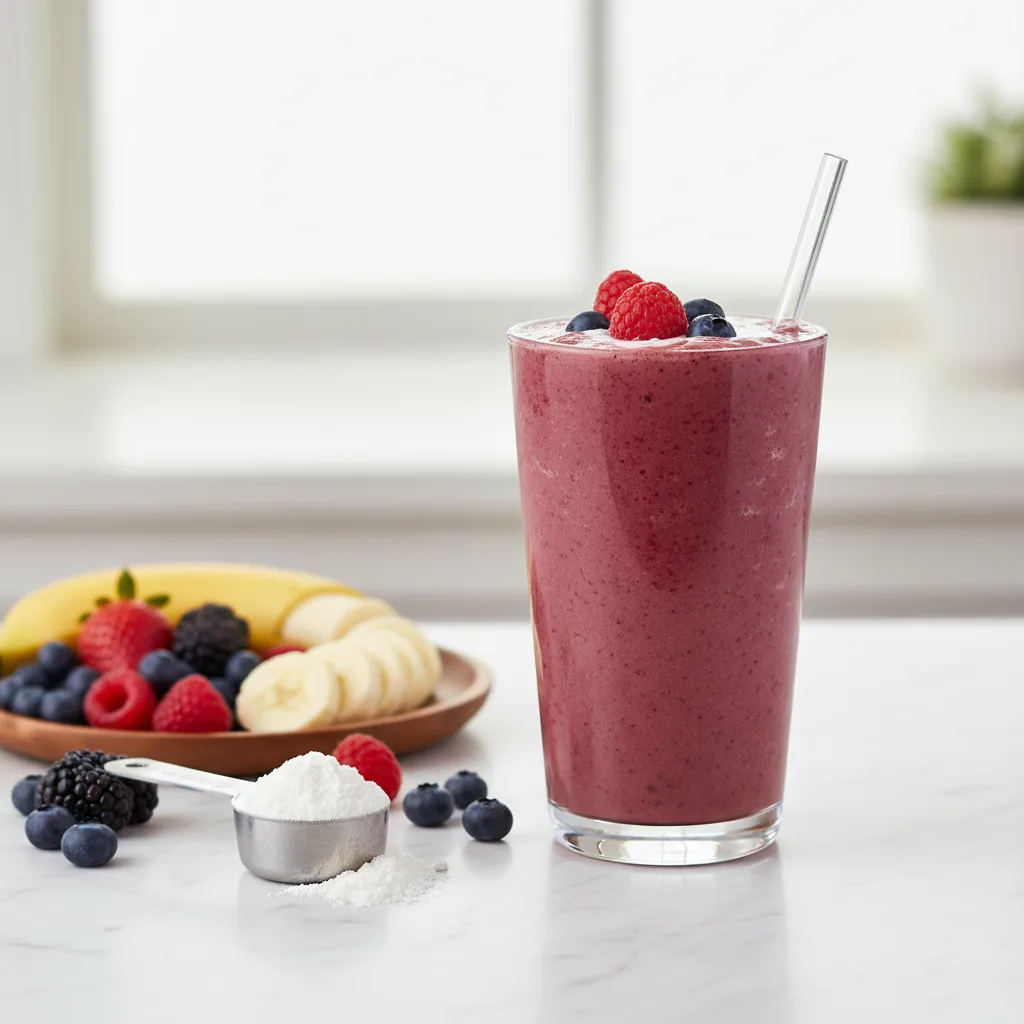
Yogurt earned its reputation honestly, but it’s far from the only way to load a smoothie with protein — and frankly not even the most efficient. Once you start treating protein powder, soy milk, nut butter and seeds as your core team, yogurt becomes optional rather than essential. The result is a smoothie that’s just as creamy and filling, but happens to suit anyone steering clear of dairy.
That’s the quiet advantage of a no yogurt smoothie: you’re not compromising on protein to avoid dairy, you’re often gaining it. The ingredients here pull double duty, bringing texture and richness alongside the numbers, so nothing tastes like a sacrifice.
How it stacks up
The protein in this glass comes from a few cooperating sources rather than one. A scoop of protein powder typically brings 20 to 25g on its own, depending on the brand. Soy or pea milk adds another 7 to 8g per cup — far more than almond or oat milk, which is exactly why they’re the milk of choice here. A tablespoon of nut butter chips in around 3 to 4g, and a tablespoon of hemp or chia seeds adds another 3 to 5g along with a dose of healthy fats. Add it up and you land at roughly 28g per serving, give or take depending on your powder. Those same fats from the nut butter and seeds, plus the fibre from the banana, berries and seeds, are what keep you full for hours rather than hungry an hour later. If you’re not sure what your daily target should be, this guide to how much protein you need on Healthline is a sensible place to start. Just to be upfront: this is general nutrition information, not medical or sports-nutrition advice, so see our disclaimer and check with a professional if you have specific needs.
What builds the protein
Each ingredient here is pulling its weight, and most are doing more than one job at once.
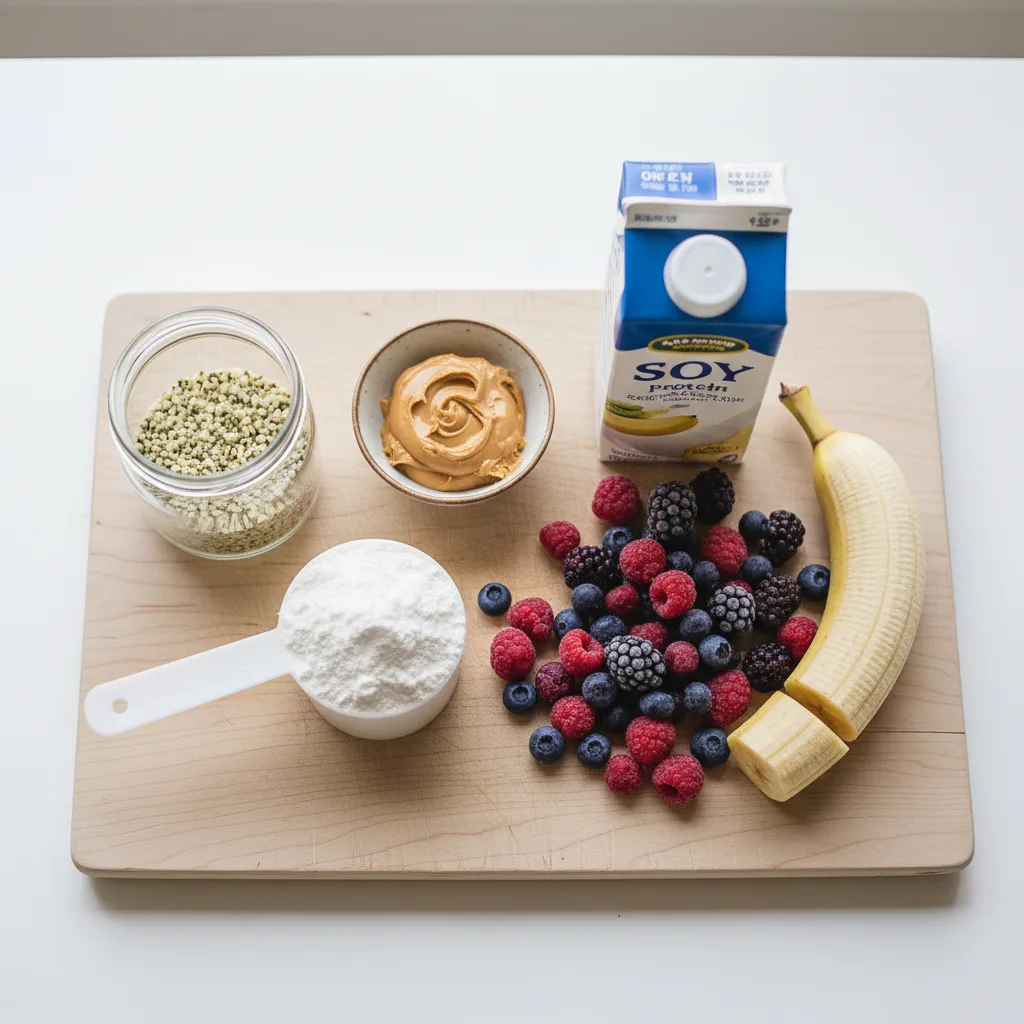
- Protein powder — the heavy lifter, bringing the bulk of the protein in one scoop. Whey, soy, pea or a blend all work.
- Soy or pea milk — chosen specifically because they out-protein every other plant milk by a wide margin.
- Nut butter — peanut or almond, for richness, a little protein and the healthy fats that keep you satisfied.
- Hemp or chia seeds — small but mighty, adding protein, omega-3s and fibre.
- Frozen banana — natural sweetness and the thick, ice-cream texture that makes it feel indulgent.
- Frozen berries — colour, antioxidants and a tart edge to balance the sweetness.
Blend it strong
A high-protein smoothie without yogurt blends like any other, but a little order helps it come together smoothly.
- Pour the soy or pea milk into the blender, then add the protein powder, nut butter, seeds and honey, if using.
- Add the frozen banana and frozen berries on top.
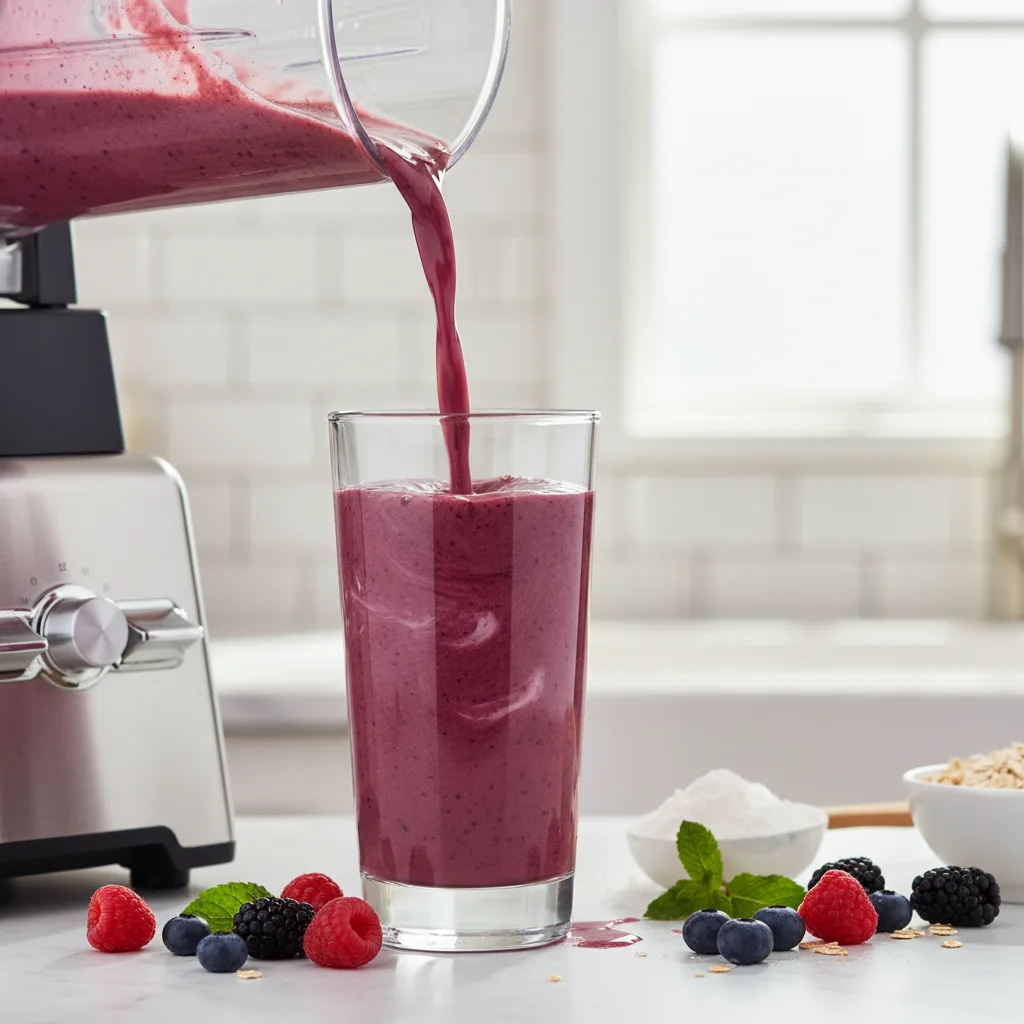
- Blend on high until thick, smooth and creamy, scraping down the sides if needed.
- Taste and adjust — a splash more milk to loosen it, or a little honey for sweetness.
- Pour into two glasses and drink soon after blending, ideally after a workout.
Hitting your protein target
If 28g doesn’t quite get you where you want to be, the recipe scales up easily. A second scoop of protein powder is the simplest lever, adding 20g or more in one move. Choosing a soy milk that’s specifically high in protein nudges it further, and a more generous tablespoon of nut butter or an extra spoon of hemp seeds tops it off. Silken tofu is another quiet trick — half a cup blends in invisibly and adds protein with no flavour to speak of.
Spreading your protein across the day tends to beat loading it all at once, so this smoothie works well as one anchor among several meals rather than your single big hit.
Power-up variations
Once you’ve got the base down, it’s easy to spin it in different directions:
- peanut butter smoothie without yogurt — leans fully into the nutty richness for a creamier, dessert-like glass.
- mixed berry smoothie without yogurt — brighter and fruitier if you want to dial back the nut butter.
- Peanut Paradise smoothie — the indulgent tropical option for when you fancy a treat.
Prep for the week
This smoothie rewards a little forward planning. Portion the banana, berries, seeds and a scoop of protein powder into freezer bags or jars, one per serving, and freeze them flat. Come morning, tip a bag into the blender, top with your soy or pea milk and nut butter, and blend — no measuring, no thinking. The frozen packs keep for a couple of months, so a single Sunday session sets you up for a fortnight of fast, high-protein mornings.
If you blend ahead, store the finished smoothie in a sealed bottle in the fridge and drink it within a day; give it a good shake, as it will separate a little.
While you’re planning the week, you can print this recipe card for free from the button on the page and stick it inside the cupboard, so your protein line-up is ready to glance at every Sunday session.
The protein breakdown
Here’s roughly how a serving lands, based on the ingredients as written.
| Nutrient | Per serving |
|---|---|
| Calories | ~300 |
| Carbohydrates | 32 g |
| Sugar | 16 g |
| Fiber | 7 g |
| Protein | 28 g |
| Fat | 9 g |
| Calcium | Good source |
Tip: your protein powder and milk make the biggest difference here, so glance at their labels if you want to fine-tune the numbers.
Nutrition note: These values are estimates calculated from the ingredients and are for general information only — not medical or dietary advice. Actual numbers vary by brand and portion. For precise data, check product labels or USDA FoodData Central, and see our disclaimer.
High-protein smoothie questions
Can you make a high-protein smoothie without yogurt?
Yes, and often the highest-protein smoothies don’t use yogurt at all. A scoop of protein powder, a higher-protein milk like soy or pea, a spoon of nut butter and some hemp or chia seeds easily add up to around 25–30g of protein — no yogurt required.
How much protein is in this smoothie?
Roughly 28g per serving as written, though it depends on your protein powder and milk. To push it higher, use a second scoop of protein powder or a soy milk that’s higher in protein.
What gives a smoothie protein if not yogurt?
Protein powder is the biggest hitter, followed by soy or pea milk, nut butter, hemp and chia seeds, and silken tofu. Any combination of these builds a high-protein smoothie without any dairy.
Is it dairy-free and vegan?
It can be — use a plant-based protein powder, soy or pea milk, and maple syrup instead of honey. There’s no yogurt or dairy in it unless you choose otherwise.
When is the best time to drink it?
It’s ideal after a workout, when protein helps muscles recover, or as a filling breakfast or meal on the go. The protein and healthy fats help keep you full for hours.
Rate this recipe
Thanks for rating! ★
Did you make this smoothie? How did it turn out?
You have already voted on this recipe.